Beyond “Just” Being a Mother: Reclaiming the Persona Behind the Invisible Work
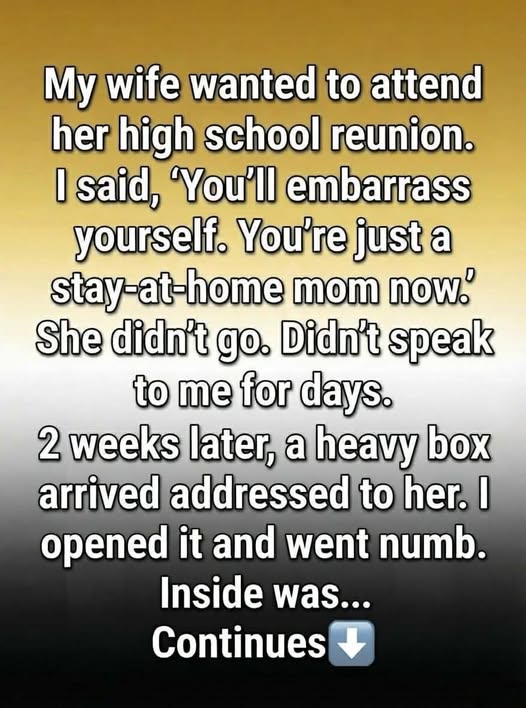
One thoughtless remark started the unraveling. The narrator reduced Emma’s entire identity to a single role when he told her that her high school reunion would be “awkward” because she was “just” a stay-at-home mother. In that instant, he suggested that motherhood had wiped out her goals, accomplishments, and uniqueness. The ensuing quiet in their house was withdrawal rather than acceptance. The days that followed were spent by Emma with quiet efficiency, but underlying that silence lay a deep wound. The event demonstrated the ease with which unseen labor may become an invisible identity.
A bulky parcel showed up at their home two weeks later. There were framed diplomas, leadership honors, and notebooks full of thorough project plans inside—proof of a motivated, successful lady who had established a remarkable life long before marriage and kids. The box served as a silent proclamation of individuality. It demonstrated that her decision to raise their kids at home was a conscious use of her strength rather than a result of a limitation. What he had perceived for smallness was actually restraint; hidden beneath the surface of everyday life was a wealth of history and skill that he had failed to notice.
Sitting among her achievements, the narrator faced an uncomfortable truth: he had diminished her identity to protect his own narrow view of success. Letters from former mentors praising her leadership and determination made it clear that motherhood was not a retreat from ambition but another expression of it. The reunion invitation, once framed as a potential embarrassment, now symbolized a vibrant past he had failed to honor. He began to understand that in long-term relationships, roles should never eclipse the full humanity of the person performing them.
The repair came through a sincere apology—one that acknowledged not just hurt feelings, but a fundamental failure of respect. Emma explained that the box was not an act of revenge, but a reminder to herself of her enduring worth in a world that often overlooks stay-at-home parents. Their conversation rebuilt something essential: mutual recognition. Love, they realized, is not simply gratitude for what someone does, but reverence for who they are. The strongest partnerships are those in which both people guard and affirm each other’s complete identities, ensuring that no one is ever reduced to “just” one thing.